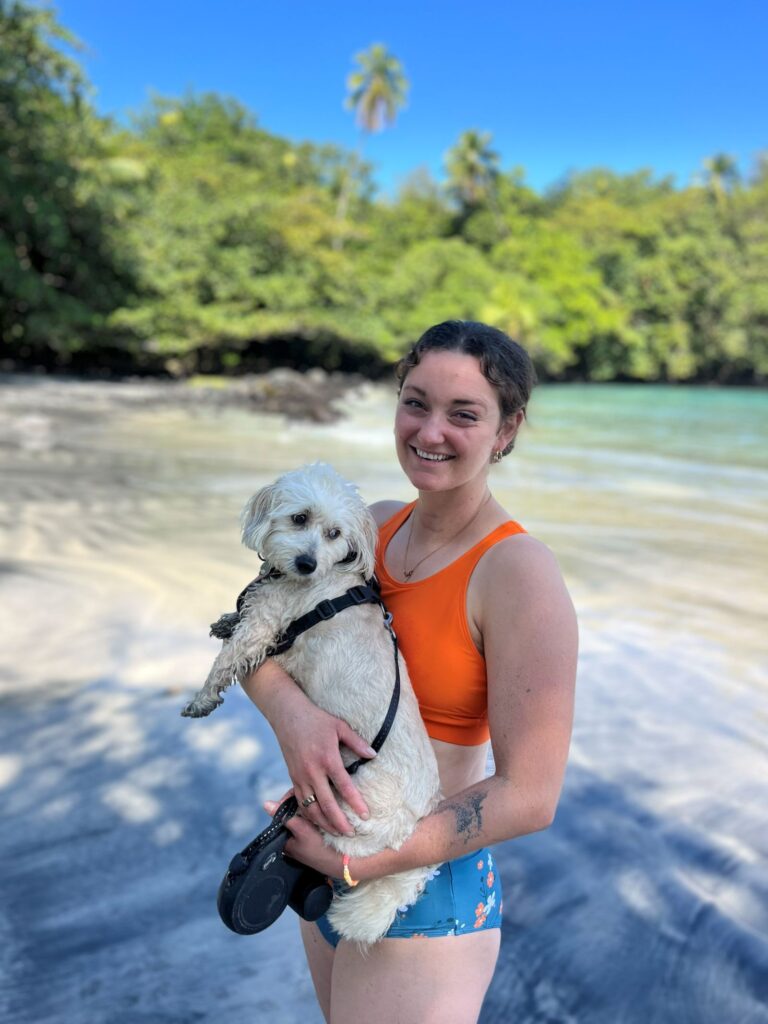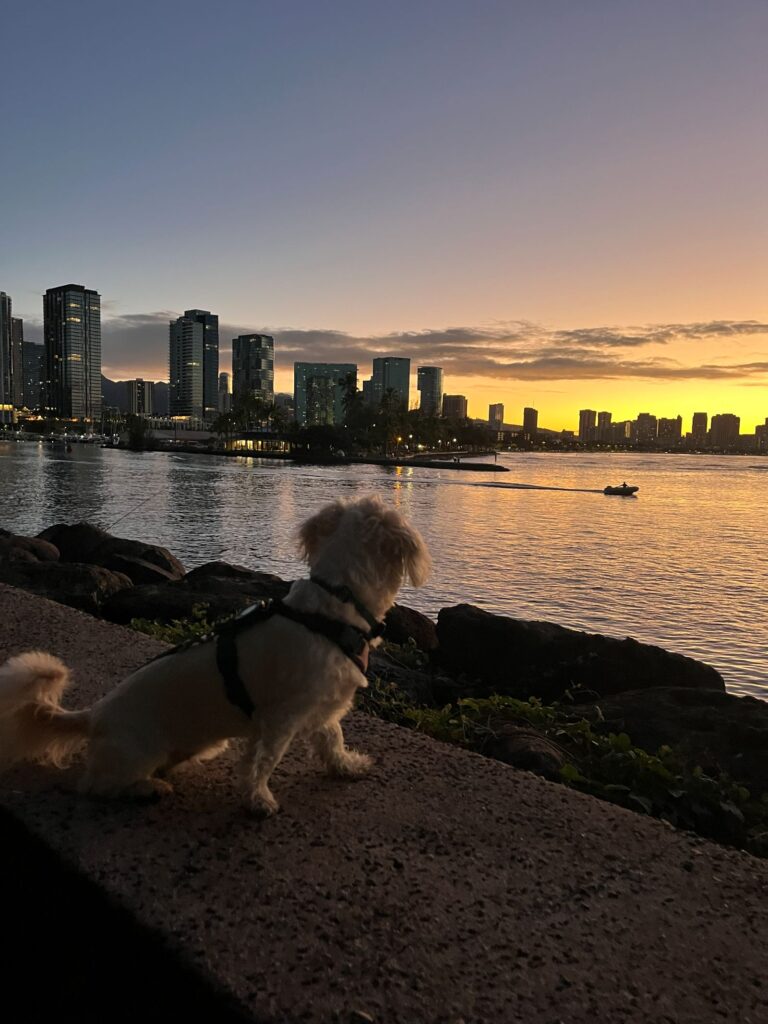
When we accepted a travel contract in Hawaii, there was no question—we wanted to bring our dog with us. She’s part of the family.
What we didn’t realize? How complicated the process would be. It consisted of several steps, months of planning, and it was pricey.
Luckily, we happened to talk to someone who knew a friend who had done it before. She gave us a helpful warning “It takes months, and it’s expensive.”
Because of that, we started early—and that made all the difference. Hawaii is very strict with the requirements and Regulations, so read the checklist carefully and follow all instructions. If requirements are not met, your pet may be quarantined for an extended amount of time and additional fees will be charged.
Official Website- Travel requirements: https://www.aphis.usda.gov/pet-travel
Official Website Instructions and Checklist: https://dab.hawaii.gov/ai/aqs/aqs-info/
Why Flying a Dog to Hawaii Is So Complicated
Hawaii is one of the only places in the world that is rabies-free, and they work hard to keep it that way. Because of this, bringing a dog to Hawaii involves a detailed, multi-step process with strict rules and deadlines.
Each step builds on the next, and missing even one requirement can delay your plans. We quickly learned that this is not something you can do last-minute—you really need to plan at least 3–4 months in advance.
A Mistake We Made (Learn From Us!)
One of the biggest mistakes we made was assuming that flying into Kona would have the same requirements as flying into Honolulu. It actually has an extra step.
If you’re flying directly to islands like Kona or Maui, there are extra steps and a strict 30-day deadline for submitting paperwork. This 30 day deadline has be met in order to arrange for a qualified vet to come to the airport to perform a physical exam. Honolulu (Oahu), on the other hand, only requires 10 days’ notice because it has a full quarantine station at the airport. At the quarantine station, the Vet is on site for the physical exam.
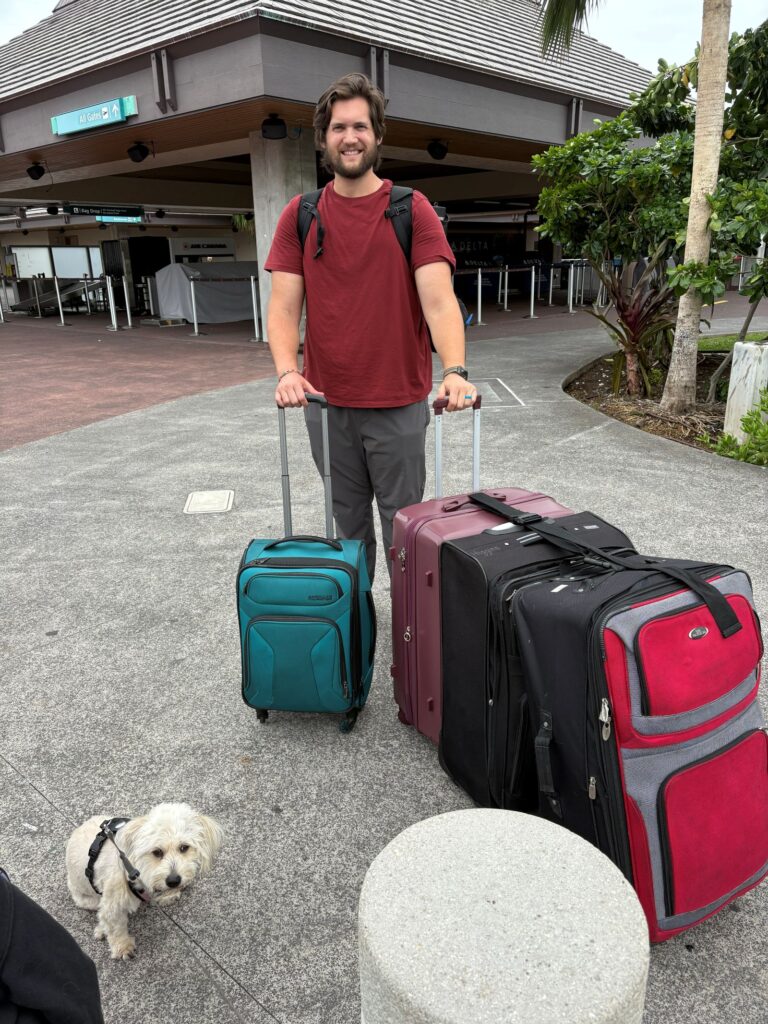
We thought we had to submit for the 10 day window and missed the 30-day window. Because of that, we had to change our plans. Thankfully, once your dog is verified at the quarantine station in Honolulu, rabies/health certificate paperwork is not required for inter-island travel. So we did not have to arrange for the vet to come meet us at the airport in Kona. We flew into Honolulu first, then continued to Kona the next day.
We gave ourselves a day in between because we didn’t want to chance missing a connecting flight if there were any holdups at the quarantine station.
It ended up working out just fine—but it’s definitely something we wish we had known earlier.
How Much It Cost to Bring Our Dog to Hawaii
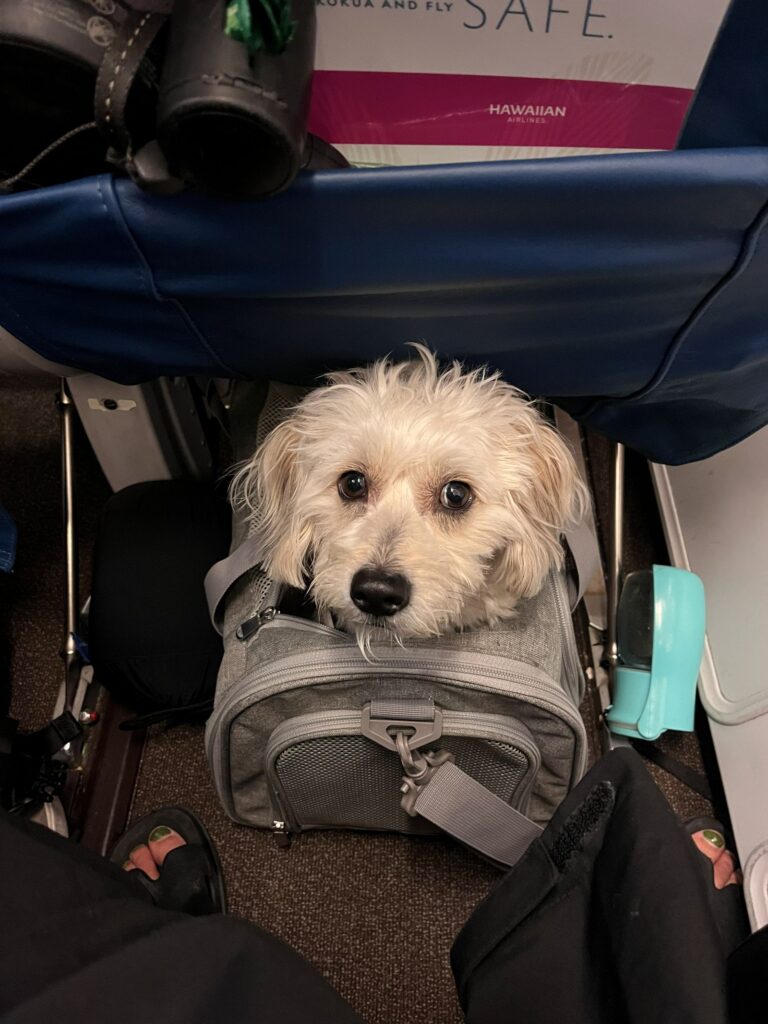
Our dog is 16 pounds and flew in the cabin under the seat with us. Altogether, it cost us about $1,500 to bring her to Hawaii.
The biggest expense by far was the FAVN rabies blood test, which alone can cost several hundred dollars depending on your vet. At the time we were living back and forth in Central Coast CA, and San Diego CA, We were quoted $800 at the Central Coast clinic and $600 at our San Diego vet, so it’s definitely worth calling around if you can.
Where to Start: Call Your Vet
- Visit the official US Department of Agriculture website for Instructions and requirements. The checklist is very detailed. Here is the link to the official website and Checklist: READ and FOLLOW every step carefully.
2. The very next thing we recommend doing is calling your veterinarian. There are two important questions to ask right away.
- A. Ask if they are qualified to issue a health certificate for Hawaii travel. Not all vets are certified to do this, and it’s a required step before your dog can fly. Most clinics have at least 1 vet Health Certificate Qualified.
- B Ask if they provide the FAVN rabies test. This is a blood test that measures your dog’s immunity to rabies, and it’s one of the most important parts of the process. (Call around for pricing. This is the most expensive Step).
Timing matters a lot here. The test needs to be completed with results confirmed, no more than 6 months before arrival, and at least 1 month prior to arrival. Results can take anywhere from a couple of weeks to 2 months, so planning ahead is key. We had the FAVN drawn 3 months before departure. It resulted in 2 weeks.
I recommend checking FAVN 3 months in advance, but check the website to see the recommended time. FAVN Website:
Microchip Required
A microchip is required for dogs to fly in general, including to Hawaii. The Required travel forms will ask for this, and the vet will need to verify that the chip is working.
Your dog isn’t microchipped?
Ask your vet if they can microchip your dog, It is a simple and fast process.
FAVN Antibody Test
This test measures the amount of antibodies circulating in your dog’s blood. To qualify as a passing result, it must be >0.5.
If the result comes back too low. The dog will need to receive another Rabies vaccine. And the dog must wait 30 days before travel/re-test.
This is why we recommend testing it several months in advance.
- Expensive: Call around to compare prices.
- Time: Received by the lab no more than 6 months before arrival, and at least 1 month before arrival. Results can take anywhere from a couple of weeks to 2 months to be confirmed.
- Vet: as well as the website can provie you with the results.
- FAVN Website: Favn test
Sending Your Paperwork to Hawaii
Once you have verified the FAVN test has resulted and is at an appropriate level. Gather these documents, you’ll need to send a packet of the documents to thevAnimal Quarantine Station, 99-951 Halawa Valley Street, Aiea, Hawaii 96701
Timeline
-Flying to Honolulu, paperwork must be received 10 days prior to departure
-Flying directly to Kona or Maui, paperwork must be received 30 days prior to departure.
Paperwork:
–AQS form: Animal Quarantine Station. (Found on the Department of Agriculture website), which has your travel details and pet information. Link to AQS Form here.
–2 Original Rabies Vaccine Certificates. Must be signed in ink by your vet. Copies are not accepted. The Vet Clinic that administered the Rabies vaccine can provide you with the certificate.
–Payment: varies depending on where you’re flying. Honolulu, it cost $166, and for other islands it cost $244 (though you should always double-check current pricing). Must be a cashier’s check or money order, no personal checks . Made out to the Department of Agriculture. (website mentions to include your dog’s microchip number)
Timing is everything here. If you’re flying into Honolulu, your paperwork needs to arrive at least 10 days before your trip. If you’re flying to another island, it needs to be there at least 30 days in advance.
When we sent ours, we were inside that 30-day window but still outside the 10-day window, which is why we no longer qualified to fly directly to Kona.
–Send everything via priority mail with tracking, –
-Follow up by email a couple of days after paperwork is delivered. Verify everything is in place. Despite their warning about high call volume, they responded to our email within one business day and confirmed everything was in order, which gave us peace of mind. [email protected]
Flying Directly to the Big Island or Maui, (anywhere other than HNL)
If you’re planning to fly directly to a neighbor island, there’s an extra layer to the process.
You will need a Neighboring Island Permit
- Send in the required Paperwork at least 30 days before departure.
- Set up an approved vet to come to the airport upon arrival to conduct physcial exam.
-Here is a link to the Neighboring Island Permit (NIP) Checklist: Contains steps and information to make a vet appointment upon arrival at the airport.
-Some Airlines don’t participate in the vet check, so call and verify when booking.
Because those airports don’t have full-time quarantine staff like the HNL airport, you’ll need to arrange for a pre-approved veterinarian to meet you when you land and perform the inspection. This has to be scheduled in advance, and they won’t even book you unless your paperwork is submitted on time.
Since we missed that deadline, none of the Kona vets would schedule with us. That’s ultimately why we chose to go through Honolulu first.
The good news is that once your dog is cleared in Honolulu, you’re free to travel between islands without repeating the process. We flew to Kona the next day with no issues at all.
Health Certificate
Within 10 days of your departure, your vet will need to complete a health certificate. This includes a physical exam, confirmation that your dog is healthy, documentation of rabies vaccinations, and verification of some form of flea and tick treatment within 14 days.
Most Vet clinics won’t schedule until you have your flight information because they need it for the health certificate.
Our vet also provided 2 copies of everything, which was helpful to have as backup during travel.
At the airport, you’ll need to check in in person. They weigh your dog in the carrier and review your health certificate before allowing you to proceed. It’s a good idea to arrive early to avoid any stress.
Choosing an Airline
Airlines are very picky when it comes to flying dogs to Hawaii. Call ahead of booking and confirm they have room and offer a flying dogs to Hawaii option before booking. You will then need to book. After booking is when they can add your pet to the flight. You most likley will have to call them again to add your pet.
Tip: We flew around the holidays. Airlines flying dogs to Hawaii are even more limited during this time. so book ahead if you can.
- Hawaiian Airlines: We flew Hawaiian going out , because it was one of the only options. Had a great experience.
- Alaska Airlines: We flew Alaska home and had no issues
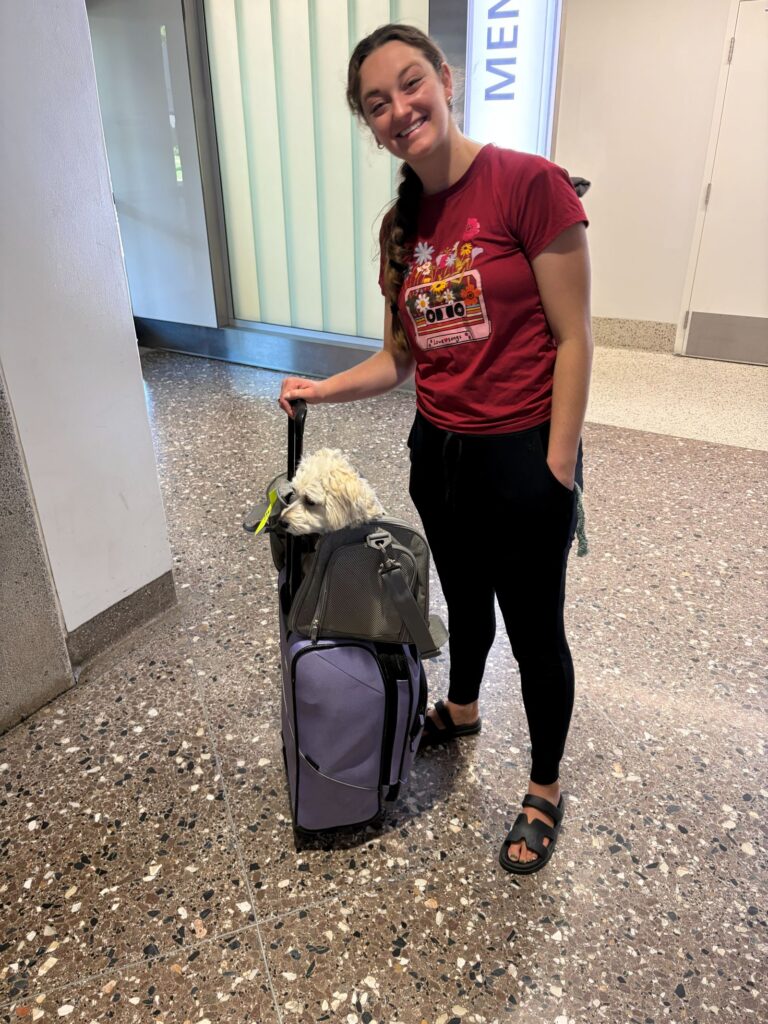
What It’s Like Flying With Your Dog
Our dog had never flown before and wasn’t crate-trained, so we started preparing about three months ahead of time. We made the carrier a positive space using treats and slowly worked up to having her stay inside comfortably. We also practiced carrying her around and taking short car rides in it.
When it came time to book flights, we found that not all airlines allow pets to Hawaii, and availability can be limited—especially around the holidays. When we traveled in early December, Hawaiian Airlines was the only option available to us.
We had to call ahead to confirm we could bring a dog, then book the flight and add her afterward. There are limits on how many pets are allowed in the cabin, so booking early is definitely a good idea.
At the airport, you’ll need to check in in person. They weigh your dog in the carrier and review your health certificate before allowing you to proceed. It’s a good idea to arrive early to avoid any stress.
Arriving in Hawaii
Schedule your arrival at HNL within AQS hours, which can be found on the Checklist. If pets arrive outside the hours they will have to be quarantined until opening. When we flew pets were required to check in by 3:30 PM to qualify for Direct Airport Release.
When you land, the airline staff will guide you to the animal quarantine station. For us, a Hawaiian Airlines representative was waiting right when we got off the plane and walked us through the process.
Your dog must stay in their carrier until they are officially checked in. The whole process took a little over an hour for us. After a short wait, they took our dog for inspection and returned her about 40 minutes later, cleared and ready to go.
One important thing to keep in mind is timing—make sure your flight arrives during the station’s operating hours, or your dog may have to stay overnight.

Keeping Your Dog Comfortable During the Flight
We gave our dog a calming chew before the flight, which helped her relax and sleep for most of the five-and-a-half-hour trip. It wasn’t her first time trying it, which I would definitely recommend—test anything new before travel day.
During the flight, we were able to slightly unzip the top of her carrier so she could peek out, and she seemed much more comfortable that way. She even stretched out a bit at our feet at one point, though it’s always best to follow the flight attendants’ guidance.
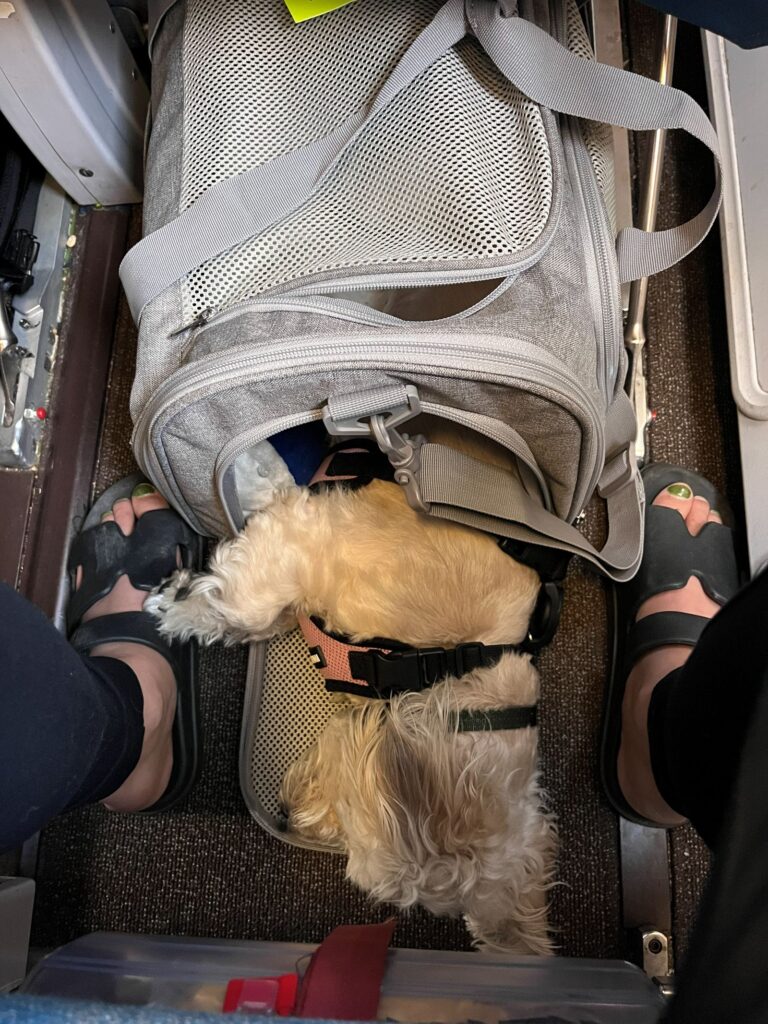
She was able to stand up and turn around in her carrier, but we unzipped it and she edged out a little to lounge.
Flying Home
Flying home was much simpler. We got a health certificate from a vet in Hawaii within 10 days of departure and showed it to the airline. We flew Alaska Airlines and didn’t run into any issues. They required the $100 pet fee.
Final Thoughts: Is It Worth It?
There’s no way around it—this process takes time, planning, and money.
But for us, it was completely worth it.
Having our dog with us while we lived and worked in Hawaii made the experience so much more special. We explored the island together, went on adventures, and made memories we wouldn’t trade for anything.